



Digital transformation journeys have become a necessity for businesses aiming to succeed in an era of rapid technological change. Infosys is leading the way, helping organizations navigate these complex transitions with innovative strategies that create new value and enhance operational excellence.


Embarking on the journey to digital transformation involves more than just adopting new technologies; it requires a comprehensive approach that combines vision, agility, and sustainability. With its extensive expertise, Infosys has established itself as a trusted partner for companies around the globe looking to secure their future.
What Is digital transformation journeys
Digital transformation journeys encompass the thorough process that organizations engage in to incorporate digital technologies across all facets of their operations. This transformation fundamentally alters how businesses function and provide value to their customers. It is an ongoing evolution rather than a one-off project, involving shifts in culture, reengineering of processes, and the adoption of new technologies.
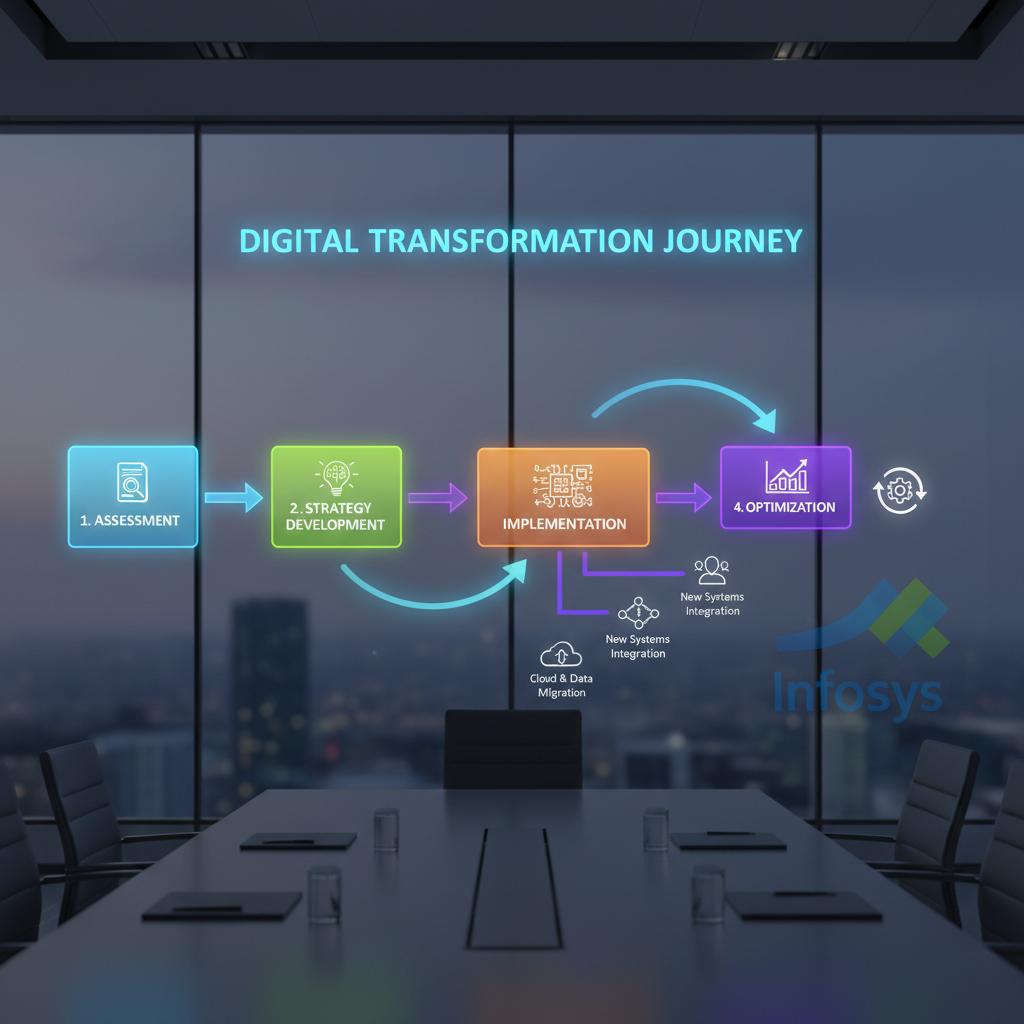
At its essence, the digital transformation journey includes embracing cloud computing, utilizing data analytics, automating workflows, and improving customer experiences through digital channels. This strategic necessity allows businesses to quickly adapt to market changes, enhance operational efficiency, and drive innovation. Infosys, with its profound technology expertise and consulting skills, assists organizations in effectively mapping and executing these journeys, ensuring they align with business objectives and market needs.
Key Drivers of Successful Digital Transformation Journeys
The success of digital transformation journeys relies on several key drivers that work together to help organizations achieve their transformation goals. Recognizing these drivers is crucial for any business starting this journey.
Leadership Commitment and Vision
A strong commitment from leadership is fundamental to any successful digital transformation. Leaders need to communicate a clear vision that aligns digital initiatives with the organization’s strategic goals. This vision serves as a guiding light, inspiring teams and securing the necessary resources.
Infosys focuses on collaborating with C-suite executives to co-create transformation roadmaps that reflect long-term business aspirations. For instance, Infosys partnered with a global financial services firm to craft a digital strategy that aligned with its goal of becoming a customer-centric, data-driven organization. This leadership-driven approach ensured ongoing momentum and collaboration across various functions throughout the transformation.
Customer-Centric Approach
At its core, digital transformation is about improving customer experiences. A customer-focused mindset fosters innovation that meets changing expectations and provides personalized, seamless interactions.
Infosys employs design thinking and customer journey mapping to assist clients in identifying pain points and opportunities for digital engagement. By integrating customer insights into technology solutions, Infosys enables businesses to create unique experiences that build loyalty and drive growth. For example, Infosys helped a major retail company enhance its e-commerce platform, leading to a 30% increase in customer retention through tailored recommendations and streamlined checkout processes.

Agile Methodologies and Continuous Improvement
The digital landscape is ever-changing, necessitating that organizations adopt agile methodologies that support iterative development and quick adaptation. Continuous improvement ensures that digital initiatives stay relevant and effective over time.
Infosys incorporates agile frameworks into its delivery models, allowing clients to speed up time-to-market and respond to feedback promptly. This approach was crucial in a telecom client’s successful launch of a new digital service platform, where incremental releases and real-time analytics facilitated rapid adjustments and improved user satisfaction.
Data-Driven Decision Making
Data is essential for digital transformation. Leveraging data analytics empowers organizations to make informed decisions, optimize operations, and discover new business opportunities.

Infosys invests significantly in advanced analytics capabilities, assisting clients in building data lakes, implementing AI-driven insights, and establishing governance frameworks. A manufacturing client utilized Infosys’ analytics solutions to decrease downtime by 25% through predictive maintenance, showcasing the concrete benefits of data-driven strategies.
Integration of Emerging Technologies
Emerging technologies like artificial intelligence (AI), machine learning (ML), the Internet of Things (IoT), and blockchain are key drivers of innovation in digital transformation journeys. Integrating these technologies unlocks new efficiencies and business models.
Infosys consistently explores and tests emerging technologies to deliver state-of-the-art solutions. For instance, Infosys deployed an AI-powered chatbot for a healthcare provider, enhancing patient engagement and reducing call center volumes by 40%. This integration illustrates how emerging technologies can revolutionize traditional processes.
Five Innovative Ways Infosys Accelerates Digital Transformation Journeys
Infosys’ approach to digital transformation is characterized by its innovative use of technology and consulting expertise. Here are five key ways Infosys drives success in digital transformation journeys.
Leveraging Advanced Data Analytics for Business Insights
Infosys taps into the power of big data and advanced analytics to deliver actionable business insights. By utilizing AI and ML models, Infosys enables clients to forecast market trends, optimize supply chains, and tailor customer experiences.
For example, Infosys collaborated with a global consumer goods company to create an analytics platform that consolidated data from various sources, allowing for real-time demand forecasting. This innovation cut inventory costs by 15% and improved service levels, highlighting the strategic importance of data analytics in transformation.
Implementing Cloud-Native Solutions for Scalability
Cloud computing is a foundational aspect of digital transformation, providing scalability, flexibility, and cost-effectiveness. Infosys specializes in cloud-native architectures that empower businesses to innovate quickly and scale operations effortlessly.
Infosys assisted a leading automotive manufacturer in migrating to a cloud environment, transitioning from legacy systems to a hybrid cloud setup. This change improved system resilience, lowered infrastructure costs by 20%, and sped up new product development cycles. Infosys’ cloud expertise ensures clients can harness cloud advantages while effectively managing risks.
Utilizing Artificial Intelligence and Automation
Automation and AI are transforming business processes by minimizing manual tasks and enhancing decision-making. Infosys integrates intelligent automation solutions that streamline workflows and boost accuracy.
A notable instance is Infosys’ collaboration with a global bank to automate loan processing through AI-driven document analysis and robotic process automation (RPA). This innovation halved processing times and improved compliance, demonstrating how automation can accelerate transformation results.
Enhancing Cybersecurity Frameworks
As digital transformation broadens the attack surface, robust cybersecurity becomes crucial. Infosys incorporates security into every layer of the transformation journey, adopting a proactive, risk-based approach.
Infosys assisted a multinational energy company in implementing a zero-trust security model, which combined identity management, threat intelligence, and continuous monitoring. This comprehensive framework reduced security incidents by 35%, protecting critical assets and maintaining customer trust.
Promoting Sustainable and Responsible Innovation
Infosys weaves sustainability into its digital transformation strategies, acknowledging the increasing significance of environmental and social responsibility. Sustainable innovation not only lessens ecological impact but also generates long-term business value.

Infosys’ commitment is reflected in its green data centers and energy-efficient solutions. For instance, Infosys collaborated with a global retailer to enhance its supply chain logistics using IoT sensors and AI, resulting in an 18% reduction in carbon emissions. This approach aligns digital transformation with corporate social responsibility objectives.
Step-by-Step: How Businesses Can Emulate Infosys’ Digital Innovation Strategies
Adopting Infosys’ innovative strategies requires a structured approach that aligns technology with business goals and culture.
Step 1: Assess Current Digital Maturity
Start by evaluating existing digital capabilities, infrastructure, and processes. This assessment will identify gaps and opportunities, forming the foundation for transformation planning.
Infosys uses proprietary maturity models and benchmarking tools to help clients gauge their digital readiness. This clarity allows for targeted investments and realistic goal-setting.
Step 2: Define Clear Transformation Objectives
Establish specific, measurable objectives that align with business priorities. Whether the aim is to enhance customer experience, cut costs, or launch new products, clear goals will guide decision-making and resource allocation.
Infosys collaborates with stakeholders to co-create transformation roadmaps that balance ambition with practicality, ensuring alignment throughout the organization.
Step 3: Invest in Talent and Technology
Digital transformation is as much about people as it is about technology. Invest in upskilling employees and acquiring the right technology platforms to support new working methods.
Infosys provides training programs and change management services that empower teams to adopt digital tools and mindsets, fostering a culture of continuous learning.
Step 4: Foster a Culture of Innovation
Encourage experimentation, collaboration, and agility. A culture that embraces change and values innovation accelerates the success of transformation efforts.
Infosys promotes innovation hubs and cross-functional teams that rapidly pilot new ideas, learning from failures and scaling successes.
Step 5: Measure and Optimize Outcomes
Set metrics to monitor progress and impact. Continuous monitoring and feedback loops facilitate course corrections and ongoing improvement.
Infosys utilizes analytics dashboards and performance frameworks to offer real-time visibility into transformation initiatives, ensuring accountability and transparency.
Case Study: Infosys-Enabled Digital Transformation in the Retail Sector
Challenge Overview
A prominent global retailer faced declining customer engagement and operational inefficiencies due to outdated legacy systems and limited digital capabilities. The company aimed to revitalize its digital presence and streamline supply chain operations to stay competitive.
Innovative Solutions Applied
Infosys executed a comprehensive digital transformation strategy that involved migrating to a cloud-native e-commerce platform, deploying AI-driven customer analytics, and automating inventory management with IoT sensors. The approach was centered on the customer, emphasizing personalized experiences and operational agility.
Measurable Business Outcomes
After the transformation, the retailer experienced a 25% increase in online sales, a 30% reduction in stockouts, and a 20% improvement in delivery times. Customer satisfaction scores significantly improved, demonstrating the tangible benefits of Infosys’ integrated digital innovation approach.
Frequently Asked Questions
What are the common challenges in digital transformation journeys?
Common challenges include resistance to change, constraints from legacy systems, unclear strategies, and skill shortages. Infosys addresses these issues by combining technology solutions with change management and leadership alignment.
How does data analytics improve digital transformation success?
Data analytics provides actionable insights that inform strategy, optimize operations, and enhance customer experiences. Infosys’ advanced analytics capabilities enable predictive modeling and real-time decision-making, which are essential for transformation agility.
Why is sustainability important in digital innovation?
Sustainability ensures that digital initiatives minimize environmental impact and support social responsibility, which is increasingly demanded by stakeholders. Infosys integrates sustainable practices to create long-term value and compliance.
Can small businesses benefit from Infosys’ digital transformation approaches?
Absolutely. Infosys customizes solutions to fit the size and complexity of businesses, offering scalable and cost-effective digital transformation services that help small businesses compete and grow.
Conclusion
Infosys continues to set benchmarks in digital transformation journeys by combining innovation, technology expertise, and sustainability. Its holistic approach—spanning advanced analytics, cloud-native solutions, AI-driven automation, robust cybersecurity, and responsible innovation—empowers businesses to navigate the complexities of the digital era confidently. Organizations that embrace these five innovative strategies can accelerate their business transformation journey, enhance operational efficiency, and deliver superior customer experiences. Partnering with Infosys ensures access to world-class technology consulting and a future-ready roadmap, making the journey of digital transformation not just achievable but truly transformative.