



Digital Transformation: 5 Steps to Seamless Integration


Digital transformation is no longer a luxury but a necessity for businesses striving to stay relevant in today’s fast-paced market. Yet, the journey from legacy systems to agile, cloud-based environments is riddled with challenges that can stall progress and drain resources.
At Everite Solutions, we recognize that the true power of digital transformation lies not just in technology adoption but in cultivating a future-ready culture that embraces change. Let’s explore five essential steps to ensure your digital transformation efforts integrate seamlessly and deliver lasting value.
What Is Digital Transformation
Digital transformation refers to the strategic integration of digital technologies into all areas of a business, fundamentally changing how organizations operate and deliver value to customers. It’s more than just upgrading software or moving to the cloud; it’s about reimagining processes, culture, and customer engagement to thrive in a digital-first world.
This transformation often involves replacing or augmenting legacy systems with agile, scalable solutions such as cloud computing, AI, and automation. The goal is to enhance operational efficiency, improve customer experiences, and enable data-driven decision-making. Companies like General Electric and Siemens have demonstrated how digital transformation can revolutionize manufacturing by integrating IoT and predictive analytics, leading to reduced downtime and increased productivity.
Step 1: Assess Current Digital Landscape
Before embarking on any digital transformation journey, a thorough assessment of your existing digital environment is critical. This foundational step helps identify strengths, weaknesses, and opportunities for integration.
Evaluate Existing Systems and Processes
Begin by cataloging your current IT infrastructure, software applications, and business processes. Understanding what systems are in place, how they interact, and where bottlenecks exist is essential. For example, many organizations discover that their legacy ERP systems lack the flexibility needed for modern workflows, causing delays and data silos.
This evaluation should also include an audit of data quality and accessibility. Poor data management can undermine digital initiatives, so identifying gaps early allows for targeted improvements.
Identify Gaps and Integration Challenges
Once you have a clear picture of your current landscape, pinpoint the gaps that hinder seamless integration. These might include incompatible software platforms, outdated hardware, or insufficient network capabilities. Integration challenges often arise when legacy systems cannot communicate effectively with new cloud-based solutions, leading to fragmented workflows.
A practical example is the retail giant Walmart, which faced integration hurdles when modernizing its supply chain systems. By identifying these gaps upfront, Walmart was able to implement middleware solutions that bridged old and new technologies, ensuring smooth data flow.
Measure Digital Maturity and Readiness
Assessing your organization’s digital maturity involves evaluating not just technology but also people and processes. Tools like the Digital Maturity Model can help gauge readiness across dimensions such as leadership, culture, technology, and customer experience.
Understanding where your business stands enables you to tailor your digital transformation strategy appropriately. For instance, a company with low digital maturity may need to invest more in training and change management before rolling out advanced technologies.
Step 2: Define Clear Objectives and Success Metrics
A digital transformation roadmap without clear goals is like a ship without a compass. Defining precise objectives aligned with your overall business strategy ensures that every integration effort drives meaningful outcomes.
Align Digital Goals with Business Strategy
Your digital transformation initiatives should directly support your company’s strategic priorities. Whether it’s entering new markets, enhancing customer satisfaction, or improving operational efficiency, clarity on goals helps prioritize projects and allocate resources effectively.
Take Starbucks as an example: their digital transformation strategy focused on enhancing customer experience through mobile ordering and personalized marketing. This alignment propelled significant growth and customer loyalty.
Set Measurable KPIs for Integration Success
Establishing key performance indicators (KPIs) allows you to track progress and quantify the impact of your digital transformation. Common KPIs include system uptime, process cycle times, customer satisfaction scores, and revenue growth attributable to digital initiatives.
For instance, DHL measures the success of its digital transformation by tracking delivery times and customer feedback, enabling continuous refinement of its logistics platform.
Prioritize Customer and Employee Experience Improvements
Digital transformation should enhance experiences for both customers and employees. Objectives might include reducing customer wait times, enabling self-service options, or automating repetitive tasks to free employees for higher-value work.
Companies like Zappos have leveraged digital tools to empower employees with real-time customer data, resulting in faster issue resolution and improved satisfaction.
Step 3: Develop a Comprehensive Integration Roadmap
A well-structured roadmap is the backbone of seamless digital transformation. It outlines the sequence, scope, and resources required for each integration phase, minimizing disruption and maximizing adoption.
Select Agile and Scalable Technologies
Choosing the right technology stack is crucial. Agile, cloud-based solutions offer scalability and flexibility, allowing businesses to adapt quickly to changing demands. Avoid vendor lock-in by opting for open standards and modular architectures.
Microsoft’s Azure cloud platform, for example, provides enterprises with a broad ecosystem of services that can be tailored and scaled as needed, supporting diverse digital transformation initiatives.
Plan Phased Implementation to Minimize Disruption
Rolling out digital transformation in phases reduces risk and allows for iterative learning. Start with pilot projects or less critical systems to validate approaches before scaling.
A phased approach was instrumental for Ford Motor Company during its digital overhaul. By incrementally integrating connected vehicle technologies, Ford minimized operational disruptions while gathering valuable user feedback.
Incorporate Change Management and Training
Technology alone won’t drive transformation; people do. Embedding change management practices and comprehensive training programs ensures employees understand, accept, and effectively use new systems.
Everite Solutions emphasizes this cultural shift, helping clients build future-ready organizations where digital tools empower rather than overwhelm teams.
Step 4: Choose the Right Partners and Solutions

Partnering with experienced vendors and consultants can accelerate your digital transformation journey and mitigate common pitfalls.
Criteria for Selecting Digital Transformation Vendors
Look for partners with proven expertise in your industry, a track record of successful integrations, and a collaborative approach. Evaluate their ability to provide end-to-end digital transformation services, from strategy to implementation and support.
Accenture, for example, is renowned for delivering tailored digital transformation solutions across sectors, combining technology prowess with deep industry knowledge.
Leveraging Cloud Transformation Strategy
Cloud adoption is often central to digital transformation. Selecting cloud providers that offer robust security, compliance, and global reach is vital. Hybrid cloud models can also facilitate smoother legacy system transitions.
Amazon Web Services (AWS) leads in cloud transformation, enabling enterprises like Netflix to scale rapidly while maintaining high availability and security.
Importance of Digital Transformation Consultancy by Everite Solutions
Everite Solutions offers specialized consultancy that bridges technology and culture, ensuring digital transformation initiatives align with business goals. Our expertise in agile environments and cloud-based digital solutions helps clients navigate complexity and achieve seamless integration.
By partnering with Everite Solutions, businesses gain access to tailored roadmaps, change management strategies, and ongoing optimization support.
Step 5: Monitor, Optimize, and Scale

Digital transformation is an ongoing journey, not a one-time project. Continuous monitoring and optimization are essential to sustain momentum and expand benefits.
Continuous Performance Tracking and Feedback Loops
Implement real-time dashboards and analytics to monitor system performance, user adoption, and business outcomes. Feedback loops involving stakeholders help identify issues early and inform adjustments.
Siemens uses advanced analytics to track the performance of its digital manufacturing systems, enabling proactive maintenance and process improvements.
Iterative Improvements Based on Data Analytics
Leverage data insights to refine workflows, enhance user experiences, and optimize resource allocation. Agile methodologies support rapid iteration and responsiveness to changing conditions.
Spotify exemplifies this approach by continuously analyzing user data to personalize content and improve platform features, driving engagement and growth.
Scaling Digital Transformation Across Business Units
Once initial integrations prove successful, extend digital transformation initiatives across departments and geographies. Standardizing best practices and technologies fosters consistency and efficiency.
Unilever scaled its digital transformation by deploying cloud-based platforms globally, enabling unified data access and collaboration across its diverse brands.
Case Study: Seamless Integration Success in Manufacturing
Background and Challenges
Caterpillar, a global leader in heavy equipment manufacturing, faced challenges integrating legacy systems with new IoT and analytics platforms. The complexity of its supply chain and production processes demanded a robust digital transformation roadmap.
Implementation of Digital Transformation Roadmap
Partnering with Everite Solutions, Caterpillar conducted a comprehensive digital maturity assessment and defined clear objectives focused on predictive maintenance and supply chain visibility. A phased implementation plan introduced cloud-based analytics and edge computing, supported by extensive employee training.
Results and Business Impact
The seamless integration led to a 20% reduction in equipment downtime and a 15% improvement in supply chain efficiency. Enhanced data visibility empowered decision-makers and improved customer satisfaction through proactive service.
Frequently Asked Questions
How does digital transformation improve business agility?
Digital transformation enables businesses to respond swiftly to market changes by adopting flexible technologies and processes. Agile systems facilitate rapid innovation, reduce time-to-market, and support dynamic customer needs.
What are common pitfalls in digital transformation integration?
Common pitfalls include lack of clear strategy, underestimating cultural change, poor data quality, and selecting incompatible technologies. Overcoming these requires thorough planning, stakeholder engagement, and continuous monitoring.
How long does a typical digital transformation integration take?
The timeline varies widely based on scope and complexity but typically ranges from several months to a few years. Phased implementation and iterative improvements help manage timelines effectively.
What role does company culture play in digital transformation?
Culture is critical; a future-ready culture embraces change, encourages innovation, and supports continuous learning. Without cultural alignment, even the best technologies may fail to deliver expected benefits.
Conclusion
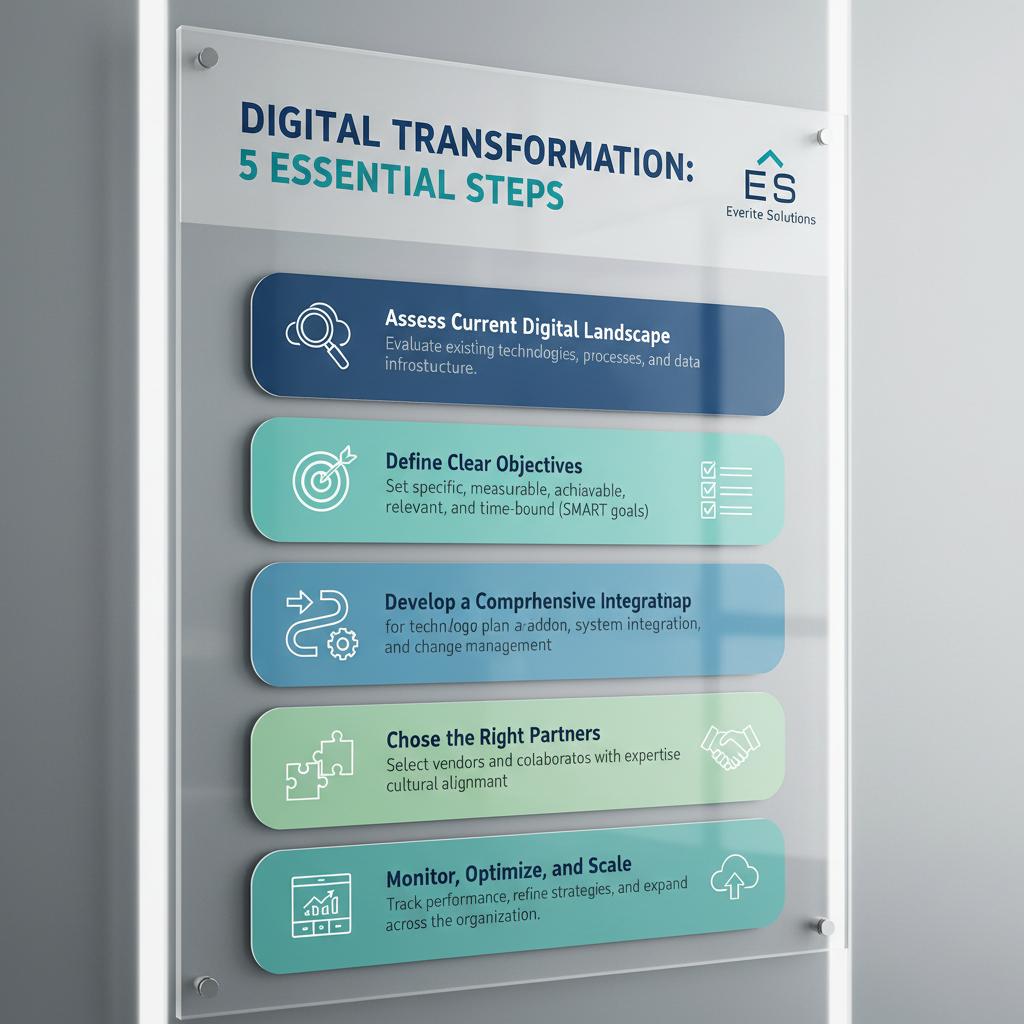
Everite Solutions understands that seamless integration is the cornerstone of successful digital transformation. By following these five steps—assessing your digital landscape, defining clear objectives, developing a comprehensive roadmap, choosing the right partners, and continuously optimizing—you can navigate complexity and build a resilient, future-ready organization. Embracing this holistic approach ensures technology adoption aligns with strategic goals and cultural readiness, empowering your business to thrive in the digital age. Let Everite Solutions guide your journey toward a seamless, impactful digital transformation.