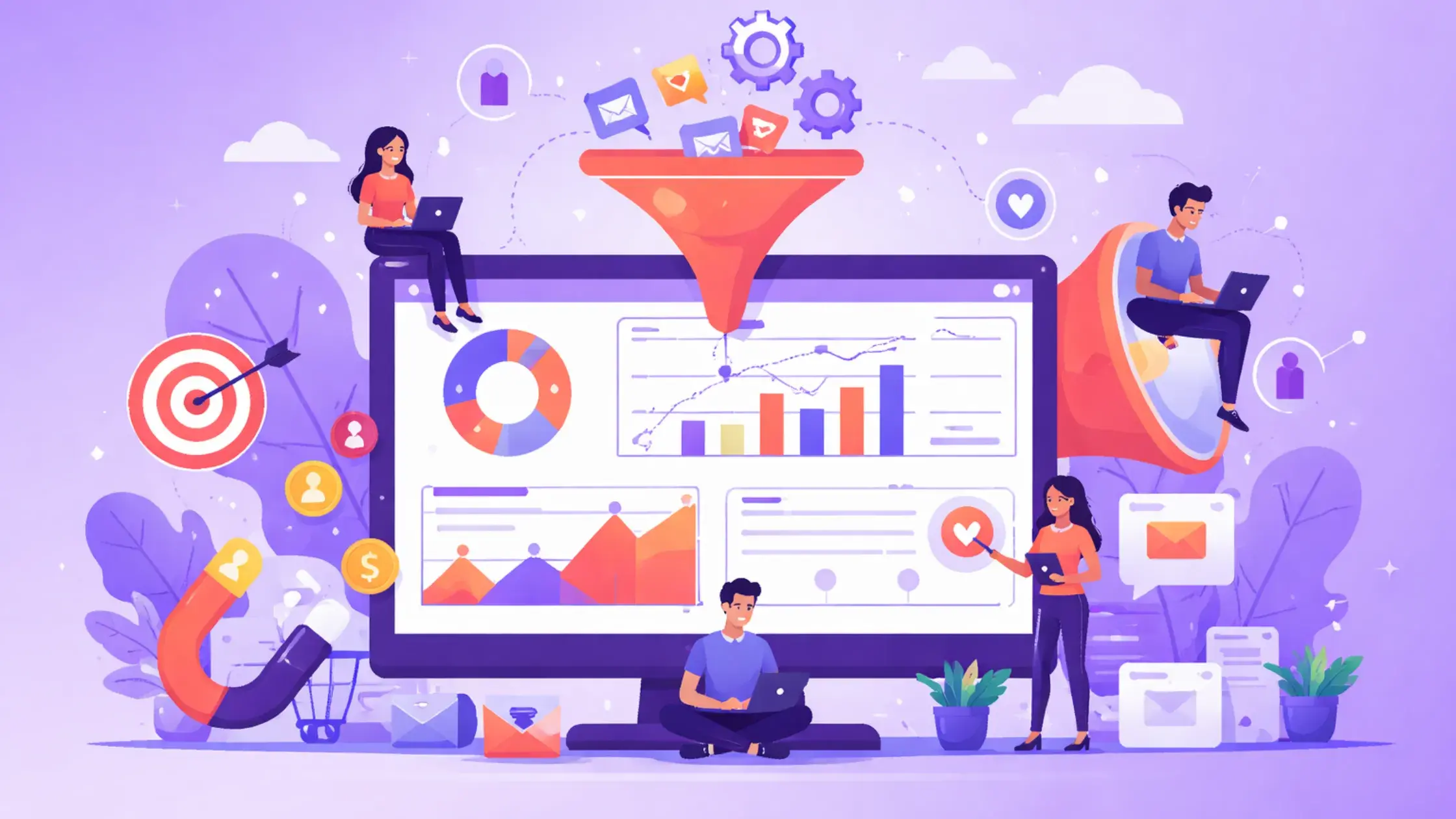
In today’s competitive digital landscape, businesses can no longer rely solely on manual marketing efforts. Customers expect personalized communication, timely follow-ups, and seamless interactions across multiple platforms. This is where marketing automation becomes a game-changer.
By automating repetitive marketing tasks such as email campaigns, lead nurturing, segmentation, and analytics tracking, businesses can scale faster while maintaining personalized engagement. When implemented strategically, marketing automation not only improves efficiency but also increases lead conversion rates, customer retention, and overall ROI.
What Is Marketing Automation?
Marketing automation refers to the use of software tools and digital systems to automate marketing activities such as:
- Email campaigns
- Lead generation
- Customer segmentation
- CRM integration
- Workflow processes
- Performance tracking
Instead of manually sending emails or tracking leads in spreadsheets, automation platforms allow businesses to create intelligent workflows that trigger actions based on user behavior.
For example, when someone downloads an eBook from your website, they can automatically enter an email nurturing sequence designed to move them toward a purchase.
If you’re building a structured digital strategy, consider exploring our Digital Marketing Services
Core Strategies for Automated Growth
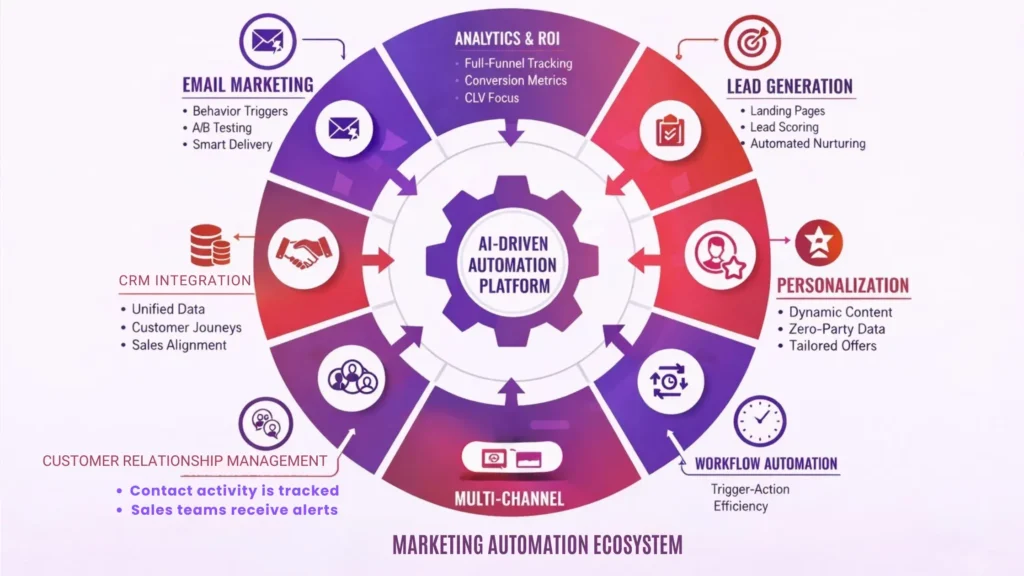
Email Marketing Automation
Email marketing automation is one of the most powerful components of modern digital marketing.
Instead of sending bulk emails to everyone, automation allows you to:
- Send the right message at the right time
- Personalize subject lines and content
- Trigger emails based on behavior
- Track open rates, click rates, and conversions
For example, if a visitor abandons their cart, you can automatically send a reminder email with a limited-time offer. This significantly increases recovery sales.
According to HubSpot’s marketing statistics , automated emails generate higher engagement rates compared to traditional campaigns.
When combined with strong SEO Services, email automation becomes even more effective by nurturing traffic generated organically.
Lead Generation Through Automation
Lead generation is not just about collecting email addresses. It’s about identifying, qualifying, and nurturing potential customers.
Marketing automation helps you:
- Capture leads via forms
- Score leads based on behavior
- Trigger follow-up emails
- Move prospects through a sales funnel
For example:
A visitor downloads a free guide →
They receive a welcome email →
They get a case study →
They receive a demo offer →
They become a customer
This structured journey improves conversion rates and shortens the sales cycle.
If your business runs paid campaigns, integrating automation with Google Ads Management Services can dramatically improve performance.
Customer Relationship Management (CRM) Integration
A CRM system like HubSpot, Salesforce, or Zoho stores and organizes customer data.
When integrated with marketing automation:
- New leads are automatically added to CRM
- Contact activity is tracked
- Sales teams receive alerts
- Personalized follow-ups are triggered
For example, if a prospect visits your pricing page multiple times, your system can notify the sales team to reach out directly.
This alignment between marketing and sales increases efficiency and revenue.
Personalization at Scale
Personalization is no longer optional — it’s expected.
With automation, you can personalize:
- Email subject lines
- Website content
- Product recommendations
- Offers based on past purchases
For instance, instead of sending “Dear Customer,” automation tools allow you to address recipients by name and tailor offers based on their browsing history.
Personalization increases:
- Email open rates
- Customer engagement
- Repeat purchases
- Brand loyalty
Segmentation for Targeted Campaigns
Segmentation divides your audience into specific groups based on:
- Demographics
- Behavior
- Purchase history
- Email engagement
- Geographic location
Instead of sending the same message to everyone, you can send targeted campaigns to each segment.
For example:
- New subscribers receive educational content
- Returning customers receive loyalty offers
- High-value customers receive premium promotions
Segmentation improves relevance — and relevance drives conversions.
Workflow Automation
Workflow automation ensures your marketing runs efficiently without manual effort.
Workflows are triggered by actions such as:
- Form submission
- Page visits
- Email clicks
- Purchase activity
Example workflow:
User downloads whitepaper →
Automatically tagged as “Interested in SEO” →
Enters 5-email nurturing sequence →
Receives consultation offer
This structured automation improves consistency and scalability.
Analytics and Performance Tracking
Automation tools provide advanced analytics to measure performance.
You can track:
- Conversion rates
- Campaign performance
- Customer journeys
- Revenue attribution
- Engagement metrics
Understanding how analytics work is critical. Tools like Google Analytics allow you to monitor website traffic and user behavior in real time.
When data drives your decisions, marketing becomes predictable and scalable.
ROI Tracking and Data-Driven Decisions
One of the biggest advantages of marketing automation is measurable ROI.
Instead of guessing, you can:
- Track revenue per campaign
- Measure cost per acquisition
- Identify top-performing channels
- Reallocate budget strategically
For example, if email automation generates a higher ROI than paid ads, you can scale email campaigns accordingly.
This level of clarity gives businesses a competitive advantage.
Multi-Channel Marketing Automation
Modern customers interact across multiple platforms.
Marketing automation enables seamless multi-channel engagement across:
- Social media
- Paid advertising
- SMS
- Website pop-ups
For example, if someone engages with your Instagram ad but doesn’t convert, automation can retarget them with a follow-up email or remarketing campaign.
Multi-channel consistency increases brand visibility and conversion opportunities.
Why Marketing Automation Is Essential for Business Growth
Marketing automation helps businesses:
- Reduce manual workload
- Increase lead conversions
- Improve personalization
- Strengthen customer relationships
- Scale operations efficiently
However, successful implementation requires expertise. Poorly designed workflows or incorrect segmentation can reduce effectiveness.
That’s why professional guidance matters.
Partner With Genbe for Advanced Marketing Automation
If you’re looking to implement advanced digital marketing tactics and automation systems, Genbe can help.
Genbe is one of the leading digital marketing companies in a.p in India, specializing in:
- Marketing automation strategy
- Performance marketing
- SEO and paid advertising
- Lead generation systems
- CRM integration
- ROI-focused campaign management
Our team builds intelligent automation workflows that nurture leads, increase conversions, and maximize return on investment.
Whether you’re a startup or an established enterprise, Genbe provides scalable digital solutions tailored to your business goals.
Contact Genbe today and transform your marketing into a fully automated growth engine
Frequently Asked Questions (FAQ)
1. What is marketing automation?
Marketing automation is the use of software to automate tasks like email campaigns, lead nurturing, customer segmentation, and performance tracking. It helps businesses save time while improving engagement and conversions.
2. How does marketing automation generate leads?
It captures leads through forms, landing pages, and ads, then automatically nurtures them with targeted emails and follow-ups until they are ready to purchase.
3. Is marketing automation good for small businesses?
Yes. Marketing automation helps small businesses compete with larger companies by improving efficiency, personalization, and customer communication without increasing manpower.
4. Does marketing automation improve ROI?
Absolutely. It tracks campaign performance, identifies high-converting channels, and helps optimize marketing spend for better returns.
5. Can marketing automation work with CRM systems?
Yes. Marketing automation integrates with CRM tools to manage leads, track interactions, and send personalized campaigns automatically.
.
Conclusion
Marketing automation is no longer a luxury — it’s a necessity for modern businesses. From email campaigns and CRM integration to analytics and ROI tracking, automation empowers companies to operate smarter and grow faster. By leveraging advanced digital marketing tactics, businesses can improve customer engagement, drive more conversions, and achieve measurable results. When implemented strategically and supported by experts like Genbe in a.p in India, marketing automation becomes more than a tool — it becomes a sustainable growth strategy.