

Advertising shapes how consumers see products, influences their buying decisions, and helps build brand identity. In today’s competitive marketplace, businesses need to communicate clearly and responsibly.
Ethical and legal obligations in advertising compliance ensure that promotional activities are honest, fair, and aligned with established regulations and social values.
If you don’t follow ethical standards or advertising laws, you may face serious consequences. These can include legal penalties, damage to your reputation, loss of consumer trust, and a decline in brand loyalty. As consumer awareness and regulatory oversight continue to grow, advertising compliance has become a critical business responsibility rather than an optional practice.
Ethical Obligations in Advertising
Ethical obligations in advertising go beyond legal compliance. They reflect a company’s commitment to honesty, integrity, and social responsibility. Ethical advertising focuses on how marketing messages affect consumers and society.
Key ethical obligations include:
- Ensuring advertising claims are truthful, accurate, and verifiable
- Avoiding misleading language, exaggerated promises, or hidden conditions
- Being transparent about pricing, terms, and limitations
- Respecting consumer privacy and handling data responsibly
- Avoiding content that may cause emotional, psychological, or physical harm
- Demonstrating cultural sensitivity and inclusivity
By following ethical advertising practices, businesses build trust, strengthen brand reputation, and foster long-term relationships with consumers.
Legal Obligations in Advertising Compliance
Legal obligations in advertising are designed to protect consumers, promote fair competition, and maintain marketplace integrity. These obligations are enforced through advertising laws, regulations, and industry standards that vary by region and sector.
Standard legal requirements include:
- Compliance with truth-in-advertising laws
- Avoidance of false, misleading, or unsubstantiated claims
- Clear disclosure of sponsored content, endorsements, and partnerships
- Protection of consumer data under privacy and data protection laws
- Respect for intellectual property, trademarks, and copyrights
Non-compliance with advertising regulations can lead to fines, lawsuits, regulatory action, and lasting reputational damage. Adhering to legal obligations demonstrates professionalism and accountability.
Ethical and Legal Aspects of Advertising
Advertising operates at the intersection of ethics and law. While legal standards define what advertisers must do, ethical principles guide what advertisers should do to act responsibly.
Ethical Aspects of Advertising
Ethical aspects focus on moral responsibility and the broader impact of advertising on society.
These include:
- Honesty and transparency in messaging
- Respect for consumer autonomy and intelligence
- Avoidance of manipulation, fear-based tactics, or emotional exploitation
- Responsible portrayal of products, services, and outcomes
- Commitment to social responsibility and public well-being
Ethical advertising helps businesses earn credibility and sustain public trust.
Legal Aspects of Advertising
Legal aspects are governed by advertising laws and regulatory frameworks that ensure fairness and consumer protection.
These aspects include:
- Truthful representation of products and services
- Disclosure of material information and sponsorships
- Compliance with data privacy and consumer protection laws
- Adherence to regional and industry-specific advertising standards
Legal compliance protects both consumers and businesses from harm and unfair practices.
What Is Compliance with Legal and Ethical Standards?
Compliance with legal and ethical standards in advertising means consistently aligning marketing activities with both regulatory requirements and moral principles.
Advertising compliance involves:
- Following applicable advertising laws and regulations
- Ensuring all claims are accurate, substantiated, and transparent
- Clearly disclosing paid promotions, sponsorships, and partnerships
- Respecting consumer privacy and data protection requirements
- Avoiding deceptive, manipulative, or harmful advertising practices
Ethical compliance goes beyond avoiding penalties—it reflects a company’s values, integrity, and commitment to responsible marketing.
Ethical Considerations in Advertising
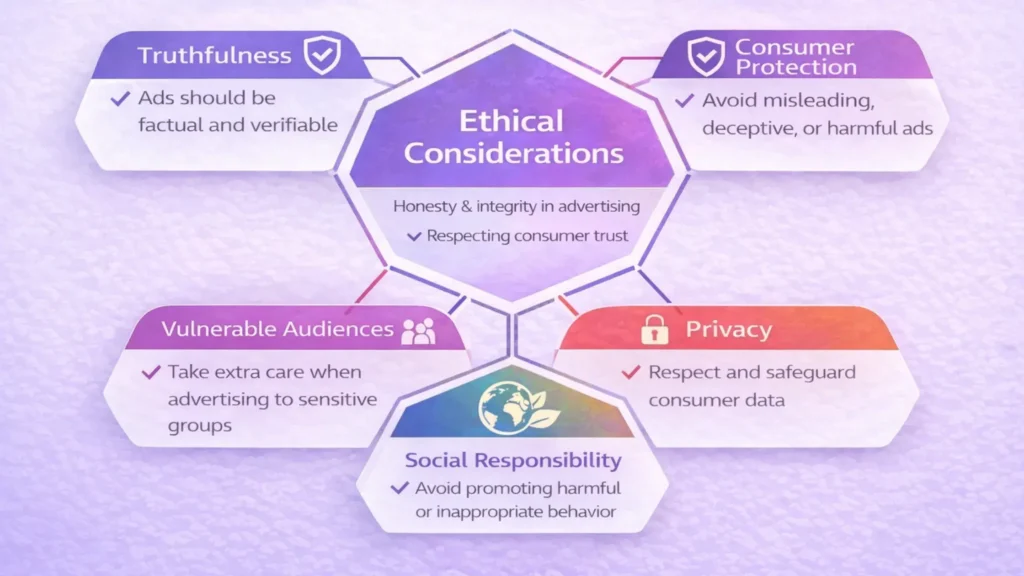
Ethical considerations guide decision-making throughout the advertising process, from campaign planning to execution and evaluation. They help advertisers assess not only what is legally permissible but also what is morally appropriate.
Key ethical considerations include:
- Truthfulness: Advertising messages should be factual and verifiable
- Transparency: Terms, conditions, and sponsorships should be clearly disclosed
- Consumer Protection: Advertisements should not mislead or deceive
- Privacy: Consumer data should be collected and used responsibly
- Vulnerable Audiences: Special care should be taken when advertising to children, elderly individuals, or medically sensitive groups
- Social Responsibility: Advertising should avoid promoting harmful, discriminatory, or unsafe behavior
Ethical considerations ensure advertising informs and persuades without exploiting consumer trust.
Advertising to Vulnerable Audiences
Advertising to vulnerable audiences requires heightened ethical awareness and stricter legal compliance. Vulnerable groups may include children, individuals with disabilities, elderly populations, or people with medical or financial challenges.
When advertising to vulnerable audiences, businesses should:
- Avoid exploiting emotional or psychological vulnerabilities
- Ensure advertisements are transparent, respectful, and age-appropriate
- Refrain from manipulative or fear-based messaging
- Comply with specific regulations designed to protect these groups
Responsible advertising in these contexts reflects social responsibility and reinforces public confidence in a brand.
Maintaining Ethical Standards in Advertising Campaigns
Ethical advertising requires continuous attention throughout the campaign lifecycle.
To maintain ethical standards, companies should:
- Conduct responsible market research
- Use ethical targeting and segmentation practices
- Avoid coercive or misleading persuasive techniques
- Monitor campaigns regularly for compliance issues
Transparency in Influencer Marketing
With the rise of influencer marketing, transparency has become essential.
Best practices include:
- Clearly labeling sponsored posts and paid partnerships
- Ensuring influencers follow disclosure guidelines
- Avoiding misleading endorsements or hidden promotions
Transparency supports trust and compliance with advertising regulations.
Consequences of Non-Compliance
Failure to comply with ethical or legal advertising standards can have serious consequences.
Potential consequences include:
- Financial penalties, fines, and legal costs
- Loss of consumer trust and brand credibility
- Adverse publicity and social media backlash
- Declining sales and reduced customer loyalty
- Increased scrutiny from regulators
Unethical advertising can undermine years of brand-building and damage long-term success.
Best Practices for Ensuring Ethical and Legal Compliance
Businesses can strengthen advertising compliance by adopting proactive strategies.
Best practices include:
- Developing written advertising guidelines and ethical policies
- Communicating standards clearly across marketing teams
- Providing regular training and education on advertising laws
- Staying updated on regulatory and industry changes
- Partnering with legal experts for campaign review and guidance
Legal professionals specializing in advertising law help businesses navigate complex regulations and reduce compliance risks.
Frequently Asked Questions (FAQs)
What are the ethical and legal aspects of advertising?
Ethical aspects focus on honesty, transparency, and social responsibility, while legal aspects involve compliance with advertising laws and regulations.
What does advertising compliance mean?
Advertising compliance means adhering to both ethical standards and legal requirements when promoting products or services.
Why are ethical considerations important in advertising?
Ethical considerations protect consumers, build trust, and strengthen brand reputation.
Who is responsible for advertising compliance?
Advertisers, marketing teams, agencies, influencers, and business leaders all share responsibility.
Conclusion
Ethical and legal obligations in advertising compliance are essential for building trust, protecting consumers, and maintaining marketplace integrity. Businesses that prioritize honesty, transparency, and regulatory adherence demonstrate accountability and social responsibility.
By integrating ethical principles, legal compliance, and responsible marketing practices, companies can reduce risk, strengthen brand reputation, and achieve sustainable long-term success. Ethical advertising is not just a requirement—it is a strategic advantage in today’s competitive business environment.
Grow with a Trusted Digital Marketing Partner
Genbe is one of the leading digital marketing agencies in Vizag, helping businesses build ethical, compliant, and high-performing digital marketing strategies. From SEO and paid campaigns to content and influencer marketing, Genbe ensures your brand grows with transparency, trust, and measurable results.
👉 Partner with Genbe today to build digital campaigns that perform—and protect your brand.