

Rebranding is often misunderstood as a logo refresh or a new color palette. In reality, rebranding is a strategic transformation that can redefine a company’s market position, rebuild trust, and ignite powerful business growth. When executed correctly, a rebranding strategy does more than change perception — it changes trajectory.
Many of the most successful rebranding examples come from companies that were once struggling. They faced declining sales, outdated brand images, or competitive pressure. Instead of fading into irrelevance, they chose to evolve. Their brand comeback stories prove that thoughtful brand transformation can become the foundation of long-term success.
In this article, we explore three iconic business turnaround stories — Domino’s, Old Spice, and Dunkin’ — and analyze what made their rebranding successful. More importantly, we uncover the strategic lessons businesses can apply today.
What Is Rebranding and Why Is It Critical for Growth?
Rebranding is the process of reshaping a company’s identity, messaging, positioning, or visual presentation to better align with evolving market conditions and consumer expectations. It may include changes in brand voice, logo, product offerings, customer experience, or even corporate values.
A well-executed rebranding strategy can:
- Restore trust after reputational damage
- Modernize an outdated brand image
- Expand into new target markets
- Strengthen competitive positioning
- Support mergers or acquisitions
- Drive measurable business turnaround
In today’s rapidly evolving market, brands that fail to adapt risk becoming irrelevant. Rebranding is not about abandoning heritage. It is about realigning identity with future opportunity.
Rebranding Example #1: Domino’s — Turning Criticism into Competitive Advantage
Few successful rebranding examples demonstrate transparency and strategic courage like Domino’s.
The Crisis
In the late 2000s, Domino’s faced harsh public criticism. Customers openly described its pizza as “cardboard-like” and flavorless. Sales declined. Consumer trust weakened. The brand’s reputation was suffering.
Many companies in similar situations choose to double down on advertising. Domino’s did the opposite. They chose radical honesty.
The Strategic Rebranding Move
Instead of masking the problem, Domino’s acknowledged it publicly. In a bold campaign, the company admitted that its pizza needed improvement. Then-CEO Patrick Doyle appeared in advertisements addressing customer complaints directly.
But the most important shift was operational.
Domino’s:
- Completely reformulated its pizza recipe
- Redesigned its crust, sauce, and cheese
- Conducted taste tests and incorporated feedback
- Improved supply chain efficiency
- Invested heavily in digital ordering systems
The company also positioned itself as a technology innovator. The introduction of online ordering, mobile apps, and the Pizza Tracker transformed customer experience and set new industry standards.
This was not cosmetic rebranding. It was a full-scale brand transformation rooted in product improvement and customer experience.
The Results
The outcome was extraordinary.
- Domino’s stock price surged dramatically over the following decade.
- Global sales increased consistently.
- The brand repositioned itself as a tech-driven food leader rather than just a pizza chain.
Domino’s successful rebranding proves that transparency, innovation, and operational excellence are powerful tools in a brand comeback.
Rebranding Example #2: Old Spice — Reclaiming Cultural Relevance
Old Spice provides one of the most dynamic brand revitalization case studies in modern marketing.
The Challenge
For years, Old Spice was associated with older generations. Although the brand had strong recognition, it lacked relevance among younger consumers. The grooming market was becoming more competitive, and new brands were capturing attention.
The issue was not product quality — it was perception.
The Rebranding Strategy
Old Spice launched the now-famous “The Man Your Man Could Smell Like” campaign. The campaign blended humor, confidence, and modern masculinity in a way that resonated deeply with audiences.
The brilliance of the strategy lay in its multidimensional targeting.
- It appealed to men directly.
- It also targeted women, who significantly influence purchasing decisions.
- It leveraged social media engagement at scale.
- It refreshed packaging and expanded product lines.
The brand embraced internet culture and conversational marketing. It responded to consumers in real time, creating viral moments that amplified visibility.
Old Spice did not abandon its identity. It reinterpreted it for a new generation.
The Results
The campaign generated massive engagement and sales growth within months. More importantly, it repositioned Old Spice from outdated to culturally relevant.
The brand comeback was driven by emotional connection and strategic alignment of messaging. Old Spice demonstrated that successful rebranding requires a deep understanding of audience psychology and cultural context.
Rebranding Example #3: Dunkin’ — Removing Limitations to Unlock Growth
Dunkin’ faced a subtler but equally significant challenge.
The Identity Constraint
While donuts built the brand’s legacy, coffee had become a primary revenue driver. However, the name “Dunkin’ Donuts” reinforced a narrow perception. Consumers primarily associated the brand with donuts rather than beverages.
This limited its competitive positioning in the fast-growing coffee market.
The Rebranding Strategy
In 2018, Dunkin’ officially dropped “Donuts” from its name.
The move was more than symbolic. It was a strategic repositioning.
- The brand adopted a simplified logo.
- Stores were redesigned with modern layouts.
- Beverage offerings were expanded significantly.
- Marketing emphasized coffee innovation and convenience.
By removing a limiting label, Dunkin’ broadened its identity.
The Outcome
The rebranding allowed Dunkin’ to compete more directly with major coffee chains. It attracted younger demographics and reinforced its beverage-first positioning.
This successful rebranding example shows that brand transformation sometimes involves removing constraints rather than adding new elements.
Why Rebranding Drives Business Turnaround
Rebranding works because perception influences behavior. Consumer perception affects:
- Purchase decisions
- Brand loyalty
- Market positioning
- Investor confidence
When perception aligns with modern expectations, growth accelerates.
A strong rebranding strategy creates clarity. It helps businesses redefine their purpose, communicate value effectively, and differentiate in crowded markets.
Brand transformation is especially powerful during:
- Market disruption
- Leadership transitions
- Competitive pressure
- Digital transformation initiatives
When executed strategically, rebranding becomes a growth multiplier rather than a risk.
Frequently Asked Questions About Rebranding
What is rebranding in business?
Rebranding in business involves updating a company’s identity, positioning, messaging, or visual representation to better align with strategic objectives and market demands.
What are examples of successful rebranding?
Domino’s, Old Spice, and Dunkin’ are widely recognized as successful examples of rebranding that achieved significant brand comebacks.
How does rebranding support brand revitalization?
Rebranding revitalizes a brand by reshaping perception, modernizing messaging, and aligning offerings with current consumer expectations.
Is rebranding only about logos?
No. While visual identity plays a role, effective rebranding involves strategic positioning, customer experience, operational improvement, and communication.
When should a company consider rebranding?
Companies should consider rebranding when facing declining sales, outdated identity, reputation challenges, or major strategic shifts.
Conclusion: Rebranding as a Strategic Growth Lever
The stories of Domino’s, Old Spice, and Dunkin’ illustrate a powerful truth: rebranding is not about aesthetics. It is about strategic evolution.
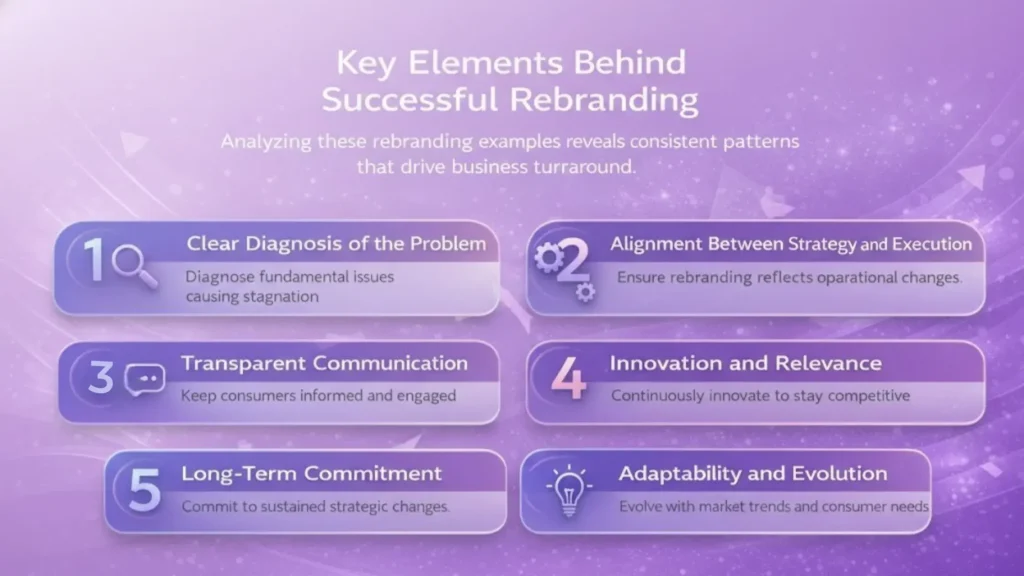
These brands achieved successful rebranding because they:
- Confronted challenges honestly
- Aligned messaging with action
- Invested in innovation
- Communicated transparently
- Committed to long-term transformation
In a competitive marketplace, staying static is not an option. Brands must evolve to remain relevant.
If your business is facing stagnation, perception challenges, or competitive pressure, rebranding may not just be an option — it may be a necessity.
Ready for Your Own Brand Transformation?
At Genbe, we help businesses unlock growth through strategic rebranding and digital positioning. From comprehensive brand revitalization to targeted rebranding strategy development, our team works closely with organizations to redefine identity, strengthen market presence, and drive measurable business turnaround results.
If your brand is ready for its next chapter, now is the time to act. Connect with Genbe today, and let’s build a rebranding strategy that transforms your brand into a powerful competitive advantage.