In 2026, a small SaaS startup with fewer than 1,000 email subscribers generated $42,000 in six days.
They didn’t have celebrity influencers. They didn’t go viral. They didn’t have a massive ad budget.
What they had was a structured product launch strategy.
That’s the difference in 2026.
Launching a product is no longer about “posting and hoping.” It’s about engineering attention, guiding behavior, and converting momentum into long-term brand growth.
In this upgraded guide, you’ll discover 15 creative product launch ideas — but more importantly, you’ll understand why they work, how real brands use them, and how to avoid the mistakes that quietly kill most launches.
Why Most Product Launches Fail (And What to Avoid)
Before we dive into strategies, let’s address the uncomfortable truth.
Most launches fail because:
- They start marketing too late
- They focus on features instead of transformation
- They rely on one channel
- They treat launch week as the finish line
A launch without Anticipation is noise.
A launch without proof is skepticism.
A launch without follow-up is wasted traffic.
The strongest product launch strategies solve all three.
Why Strong Product Launch Strategies Matter in 2026
Consumers are more skeptical. Competition is fiercer. Attention spans are shorter.
But here’s the opportunity: structured creative campaigns now outperform random visibility.
Modern launches must:
- Build Anticipation before release
- Deliver authority and trust
- Create urgency without desperation
- Extend beyond launch week into evergreen systems
When done correctly, a launch becomes a repeatable growth engine — not a one-hit spike.
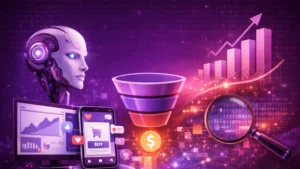
The funnel above shows how awareness turns into engagement, engagement into conversion, and conversion into long-term brand growth.
1. Build Anticipation with a Multi-Phase Teaser Campaign
Apple doesn’t “announce” products — they orchestrate Anticipation. By the time the keynote begins, millions already expect something meaningful. That Anticipation shortens buying hesitation because demand has been emotionally primed.
Anticipation works because of psychological commitment. When people opt into a waitlist or follow teaser content, they mentally invest before the offer even appears.
How to Apply This Strategically
Instead of revealing everything at once, structure your launch timeline:
- Phase 1 – Problem Awareness: Highlight the pain your audience feels. Use data, short videos, or storytelling posts.
- Phase 2 – Transformation Tease: Show the outcome without revealing the mechanism.
- Phase 3 – Waitlist Activation: Invite people to “get early access.” This builds measurable demand.
- Phase 4 – Proof Drops: Share testimonials, beta feedback, or early performance results.
The result? When your cart opens, you’re not convincing—you’re fulfilling expectations.
2. Launch a VIP Early Access Round
Exclusivity taps into status psychology. When users feel they are “inside” before the public, their emotional attachment to the platform increases.
Notion and many SaaS companies use this to validate features while simultaneously creating buzz.
How to Execute for Maximum Impact
- Segment your email list and invite your most engaged subscribers first.
- Offer tangible benefits (lifetime pricing, bonus features, priority onboarding).
- Collect testimonials during this stage and integrate them into your public launch assets.
VIP access does more than drive early revenue — it seeds social proof that fuels broader conversions.
3. Host a High-Impact Live Launch Event
Live launches remove doubt by creating real-time clarity. Instead of static sales copy, prospects see demonstrations, objections addressed, and proof delivered instantly.
In multiple B2B campaigns, webinar attendees convert 2–3x as often as cold traffic because the experience builds trust.
A Proven Launch Structure
- Frame the problem and stakes.
- Agitate the cost of inaction.
- Demonstrate your solution clearly.
- Present a real case study.
- Introduce the offer with urgency.
Live interaction transforms passive viewers into active buyers.
4. Partner with Micro-Influencers (Not Celebrities)
Massive influencers deliver reach. Micro-influencers deliver trust.
Smaller creators typically have stronger engagement and niche authority. Their audiences view them as peers rather than advertisers.
Strategic Execution
- Select creators aligned with your audience demographics.
- Provide early access to products and encourage authentic reviews.
- Use affiliate models to align incentives.
This approach often reduces cost per acquisition while increasing authenticity.
5. Create a Limited-Time Founders’ Offer
Scarcity accelerates decisions because it introduces consequences. Without a deadline, prospects delay.
However, urgency must be credible. Artificial countdown timers erode trust.
Make Scarcity Ethical and Effective
- Limit availability (first 100 customers).
- Offer meaningful bonuses rather than deep discounts.
- Clearly communicate price increases post-launch.
When urgency is real, conversions spike naturally — especially in the final 24 hours.
6. Run a 5–7 Day Launch Challenge
Challenges create momentum before selling begins. Instead of asking for a purchase immediately, you ask for participation.
Participation builds micro-commitments, and micro-commitments increase the likelihood of larger decisions.
How to Design an Effective Challenge
- Align daily tasks with your product’s promise.
- Encourage public sharing for organic reach.
- Conclude with a transition from the challenge result to the product solution.
By launch day, your audience is primed — not cold.
7. Leverage User-Generated Content (UGC)
Trust is the currency of modern marketing. UGC replaces claims with evidence.
Brands like Glossier scaled by showcasing real customers, not polished brand messaging.
How to Build a UGC Engine
- Encourage customers to share experiences with branded hashtags.
- Incentivize testimonials with small rewards.
- Integrate reviews into landing pages, ads, and emails.
When prospects see peers succeeding, skepticism decreases.
8. Tell a Founder Story That Creates Emotional Buy-In
Data convinces. Stories persuade.
Airbnb’s origin story humanized the company and created emotional alignment.
Crafting a Compelling Story
- Share the pain point that inspired the product.
- Highlight obstacles and pivots.
- Connect the journey to a larger mission.
Storytelling builds long-term brand affinity beyond the transaction.
Ready to Turn These Product Launch Ideas Into Real Revenue?
Ideas create inspiration.
Execution creates revenue.
If you want structured positioning, high-converting funnels, performance ads, and creative campaigns engineered for scale, Genbe can help.
At Genbe, we transform product launch strategies into measurable brand growth systems.
Book a strategy session and let’s architect your next breakthrough launch.
9. Execute a Niche PR Strategy
Most founders chase visibility.
Smart founders chase relevance.
A 2023 B2B SaaS company in the HR-tech space decided not to pursue top-tier tech media. Instead, they targeted six niche HR and operations podcasts with audiences between 5,000 and 25,000 listeners.
The result?
- 42% of total launch signups came directly from podcast traffic.
- Those leads converted at 2.4x the rate of paid social traffic.
- Customer acquisition cost dropped by 37% compared to cold ads.
Why? Because the audience was already problem-aware.
The Strategic PR Framework
High-performance niche PR follows three principles:
1. Problem-Led Pitching
Journalists and hosts don’t want product announcements. They want stories and insights. Position your pitch around:
- Market shifts
- Emerging trends
- Data-backed observations
- Founder lessons
2. Authority Through Education
During interviews, focus on frameworks and insights rather than feature promotion. Teaching builds authority; promotion builds resistance.
3. Track Conversion, Not Vanity Metrics
Monitor referral traffic, assisted conversions, and demo bookings — not just impressions.
According to Cision’s State of the Media report, 68% of journalists prefer expert commentary over product-focused pitches. That statistic alone should change how you approach launch PR.
Niche PR doesn’t just amplify awareness. It compounds authority.
10. Create Strategic Cross-Promotional Bundles
Collaboration is one of the most underutilized product launch strategies.
In 2022, a productivity SaaS platform partnered with a digital planner creator during launch week. Instead of promoting separately, they:
- Hosted a joint webinar.
- Bundled both tools at a limited-time price.
- Shared email campaigns across both lists.
The outcome:
- 31% list growth for both brands.
- 28% higher average order value compared to standalone offers.
- A 22% increase in post-launch retention due to ecosystem integration.
Why Bundles Convert Better
Bundling increases perceived value while reducing decision friction. Buyers feel they are receiving a complete solution rather than a single product.
Research from McKinsey shows that ecosystem partnerships increase customer lifetime value by up to 30% when products are complementary.
How to Structure a High-Impact Bundle
- Identify overlapping audiences, not identical ones.
- Align positioning and messaging.
- Create a clear combined outcome (“Plan + Execute + Track in One System”).
- Establish shared tracking links to measure ROI.
Strategic collaboration accelerates brand growth without doubling ad spend.
11. Personalize Launch Messaging Using AI and Behavioral Data
Generic messaging performs poorly in 2024.
According to HubSpot, segmented email campaigns drive 30% more opens and 50% more click-throughs than non-segmented campaigns.
During one eCommerce product launch, an apparel brand segmented audiences into:
- Repeat buyers
- Cart abandoners
- First-time visitors
Each group received tailored messaging.
The result:
- 38% increase in email-driven revenue.
- 21% lower cost per acquisition from retargeting ads.
Strategic Personalization Model
Cold Leads: Focus on problem awareness and proof.
Warm Subscribers: Emphasize testimonials and urgency.
Existing Customers: Highlight loyalty bonuses and exclusivity.
Advanced personalization goes beyond subject lines. It includes:
- Dynamic product recommendations
- Behavior-triggered email flows
- AI-driven predictive offers
Salesforce research indicates 73% of consumers expect companies to understand their unique needs. Launch messaging that ignores this expectation leaves revenue on the table.
Personalization is no longer optional — it is foundational business innovation.
12. Offer an Interactive Demo or Free Trial Experience
People trust what they experience.
SaaS companies that offer interactive demos see conversion rates up to 25% higher than those on static product pages, according to G2 industry benchmarks.
Canva’s freemium model is a masterclass in friction reduction. By allowing users to experience design success instantly, the brand removed psychological risk.
Case Example
A workflow automation startup implemented a 7-day guided trial during launch. Instead of giving full access immediately, they structured onboarding with:
- Daily micro-tasks
- Video walkthroughs
- Automated check-in emails
The outcome:
- 46% trial-to-paid conversion rate.
- 18% higher retention after 90 days.
Why Interactive Launches Work
They reduce uncertainty.
They demonstrate value.
They build commitment before asking for payment.
In competitive markets, experience beats explanation.
13. Add a Social Impact Component
Modern consumers increasingly align purchases with values.
A 2023 Deloitte study found that 55% of Gen Z consumers research a brand’s ethics before purchasing.
When TOMS integrated its “One for One” model, it didn’t just sell shoes — it sold participation in a mission.
Strategic Impact Integration
Impact must be authentic and measurable.
During a recent launch, a wellness brand pledged 5% of first-month revenue toward mental health nonprofits. Instead of vague claims, they:
- Published donation totals weekly.
- Shared nonprofit partner interviews.
- Updated customers on impact milestones.
Launch revenue exceeded projections by 23%, and social engagement doubled compared to prior campaigns.
Impact differentiates when it aligns with brand identity — not when it feels opportunistic.
14. Build a Multi-Email Launch Sequence That Drives Momentum
Email remains one of the highest ROI channels in digital marketing.
Litmus reports that email delivers an average ROI of $36 for every $1 spent.
Yet most launches send only one or two announcement emails.
A High-Performance Launch Email Framework
Email 1 – Curiosity Tease
Highlight the core problem and the upcoming reveal.
Email 2 – Education & Stakes
Explain why the problem matters now.
Email 3 – Social Proof
Share testimonials, beta results, or case studies.
Email 4 – Launch Announcement
Open cart with clear value articulation.
Email 5 – Objection Handling
Address FAQs and hesitations.
Email 6 – Final Call
Reinforce urgency before close.
Mini Case Study
A digital course creator increased launch revenue by 64% simply by extending their email sequence from 3 emails to 8 emails — each addressing a specific objection or segment.
Email sequences are not repetitive reminders. They are persuasion architecture.
When structured intentionally, they guide readers from awareness to urgency without feeling aggressive.
15. Turn Your Launch into an Evergreen Growth Engine
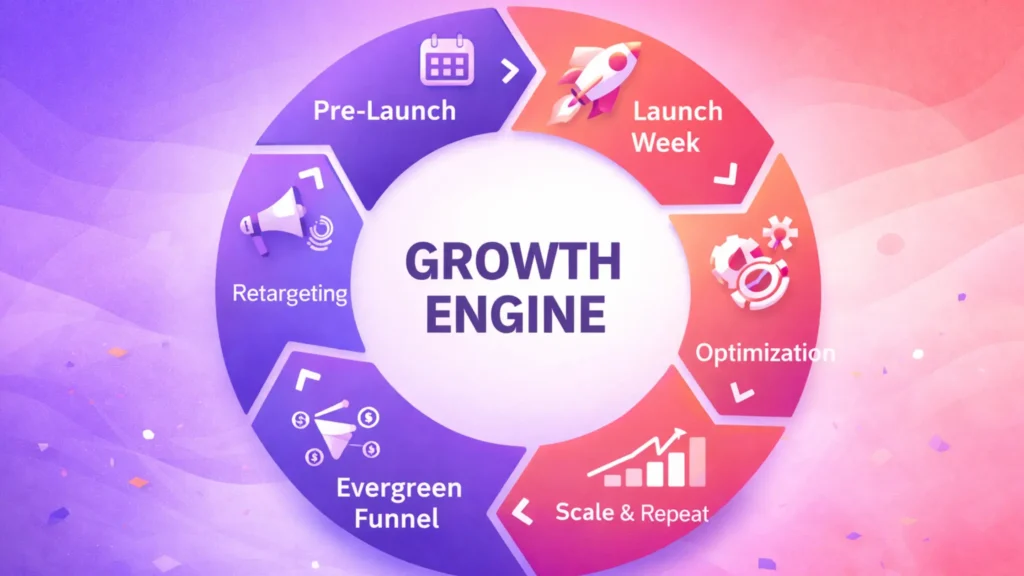
Most brands treat launch week as an endpoint. Growth-driven brands treat it as iteration one.
The Growth Cycle Explained
- Pre-Launch: Build demand.
- Launch Week: Convert attention.
- Retargeting: Recover missed buyers.
- Optimization: Improve based on performance data.
- Evergreen Funnel: Automate winning assets.
- Scale & Repeat: Expand budget and channels strategically.
Each stage feeds the next, creating a continuous growth loop rather than isolated spikes.
Turn Your Next Product Launch Into Predictable Revenue Growth
Ideas create inspiration.
Execution creates revenue.
If you want structured positioning, high-converting funnels, performance ads, and creative campaigns engineered for scale, Genbe can help.
At Genbe, we transform product launch strategies into measurable brand growth systems.
Book a strategy session and let’s architect your next breakthrough launch.
Frequently Asked Questions (FAQ)
What are the most effective product launch ideas in 2026?
Those that combine Anticipation, authority, urgency, and post-launch systems.
How long should a product launch campaign last?
Typically 6–8 weeks, including pre-launch buildup and post-launch optimization.
What is the biggest launch mistake?
Starting marketing too late and stopping follow-up too early.
Can small brands compete with large competitors?
Yes — through niche positioning, community-driven campaigns, and focused strategy.
Conclusion
In 2026, product launch strategies must do more than create buzz.
They must create momentum.
The brands that win build anticipation, deliver proof, personalize communication, and optimize continuously.
Launch boldly.
Refine relentlessly.
Scale strategically.
And when you’re ready to elevate your launch from good to exceptional, Genbe is here to help you grow with clarity and confidence.